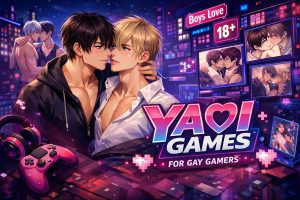
 Yaoi Games, also known as Boys Love (BL) games, are a niche genre of video games, predominantly visual novels (VNs) and eroge (erotic games). Yaoi games center on romantic, emotional, and often explicit sexual relationships between male characters. They are typically created by women for a primarily female audience (often called fujoshi or fudanshi fans), emphasizing idealized male beauty, drama, power dynamics (like dominant “seme” and submissive “uke” archetypes), and fantasy elements rather than realistic depictions of gay male experiences.
Origin and Terminology
The term “yaoi” is a Japanese backronym for yama nashi, ochi nashi, imi nashi (“no climax, no point, no meaning”), originally a self deprecating label for amateur dōjinshi (fan works) in the 1970s that prioritized explicit male on male sex scenes over plot. It evolved into popular media like manga, anime, and games under the umbrella “Boys Love” (BL), which is more polished and story driven. In the West, “yaoi” is often used interchangeably with BL for any male on male romance media, though purists distinguish yaoi as the raw, fan origin explicit style.
Yaoi games emerged in Japan in the early 2000s, with the BL market generating significant revenue. English releases started around 2006 with titles like Enzai: Falsely Accused by JAST USA, though discord fan translations filled gaps. In 2016 yaoi boys love game Gay Harem launched and has been the most popular uncensored yaoi game online since 😛
Key Characteristics
- Gameplay: Mostly choice based VNs with branching routes, multiple endings, CG galleries (erotic art unlocks), and voice acting. Some include RPG elements, dating sim mechanics, or mini games.
- Themes: Romance, angst, supernatural (vampires, demons), horror, school life, dystopia. Heavy NSFW content is common, including H-scenes (sex scenes).
- Art Style: Anime inspired with bishōnen (pretty boys) slender, youthful, expressive males. Contrast with bara (gay male oriented games/manga featuring muscular, hairy “bears”).
- Audience: Female centric fantasies; not always realistic or positive portrayals of LGBTQ gay sexual relationships.